


Workday
Workday, Inc.
Workday is the kind of business app I would judge less by how exciting it feels and more by whether it removes small obstacles from my working day. After spending time with it, my impression is that its value comes from bringing common employee and manager tasks into one mobile workspace rather than asking me to jump between separate tools. That makes it especially relevant when work already depends on an organization using Workday across its internal processes.
Developed by Workday, Inc., this free app is aimed at employees and managers, and it is available to an Everyone audience. It belongs firmly in the business category, although the experience is personal: checking work information, handling routine actions, and keeping up with responsibilities while away from a desk. Its average rating of 4.3 from around 250 thousand ratings, together with more than 10 million installs, suggests that it has become a familiar work companion for a large mobile audience.
Building a work routine around Workday
Start with the workflow before opening the app
The most useful way to approach Workday is not to treat it as an endless menu of work functions. I get better results when I first decide what I am trying to complete. Am I checking a work detail, responding to an approval, reviewing something connected with my role, or simply catching up on an item that normally waits until I reach a computer? That small pause prevents the app from becoming another place where unfinished tasks accumulate.
For an employee, the app makes the most sense as part of a daily routine built around quick checks. I might open it at the beginning of the day to see what needs attention, return during a break to handle a short action, and use it again before finishing work to make sure nothing important is waiting. This approach is more sustainable than constantly opening the app without a purpose, especially when mobile notifications or other work tools are already competing for attention.
Managers can use the same principle, but their workflow usually involves more decisions and follow-up. A useful habit is to separate urgent approvals from items that deserve a longer review. Mobile access is convenient for the first group, while a larger screen may be more comfortable for complicated information or careful comparison. Workday works best as a decision-and-follow-up tool, not as a replacement for every desktop work session.
Related News

Why WhatsApp Messenger Still Makes Everyday Communication Feel Easy

Jurassic World: The Game Is the Better Dino Tycoon for Strategic Players

Threads in Real Life: Who Should Join, Lurk, or Leave

How SHEIN Turned Shopping Into an Endless Content Feed

How to Make Fortnite Feel Smarter on Mobile

Should You Switch to Microsoft Outlook on Mobile?
That distinction is important because a mobile interface naturally favors short interactions. I appreciate being able to deal with a task when I am away from my desk, but I would not choose a phone for every piece of administrative work. The app helps most when it keeps a small task from blocking progress; it is less helpful when I try to force a long, detailed process into a narrow screen.
Capture information without letting it become clutter
The central advantage of having work-related actions in one place is reduced mental switching. Instead of remembering which separate service contains a particular employee task, I can begin in Workday and see what is relevant to my role. That is not the same as having a personal notes system, and I would not use it as one. Its strength is structured workplace information, not open-ended brainstorming or project documentation.
In everyday use, I would capture work responsibilities in two layers. First, I would use the app to identify the official action that needs completing. Then I would keep a simple personal reminder outside it for anything that requires preparation, such as collecting a detail, checking a document, or speaking with a colleague. This avoids a common mistake: assuming that completing a mobile action also completes all the thinking around it.
Gallery
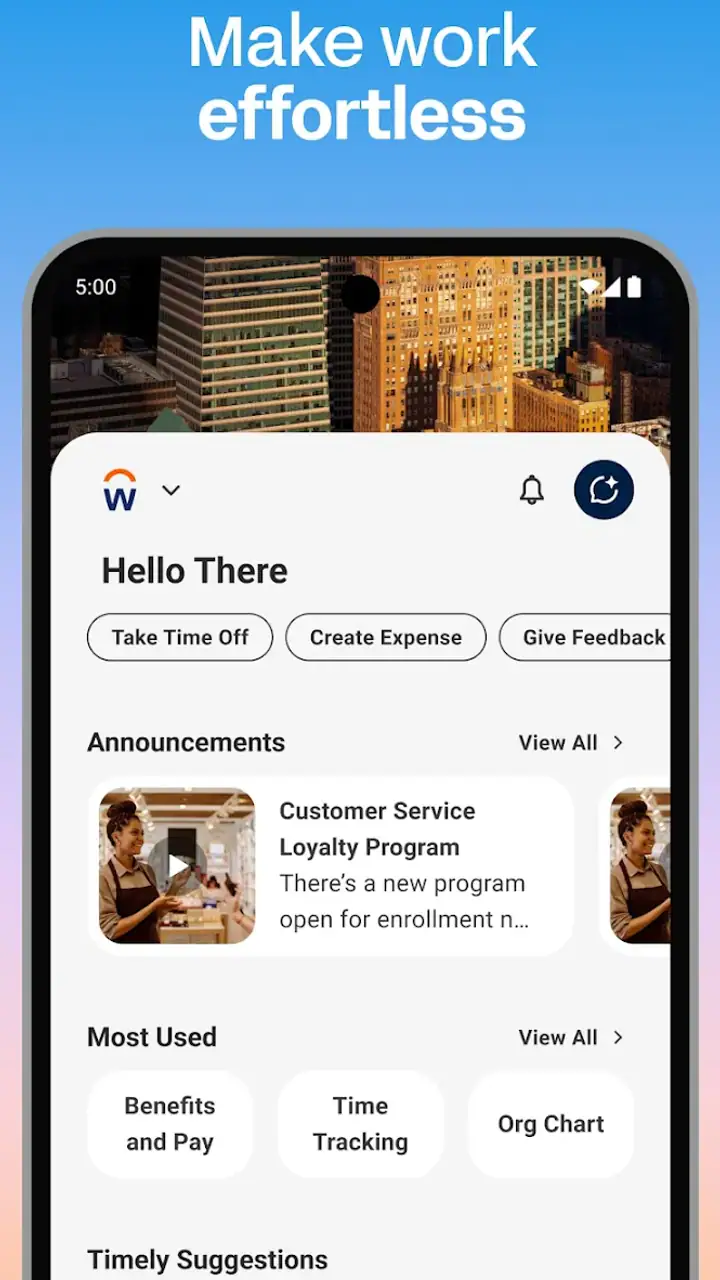
A realistic example is a manager who notices an approval while commuting. The sensible workflow is to read enough to understand what is being requested, decide whether the information is sufficient, and either complete the action or mark it for a later review. If the decision depends on context that is easier to inspect on a computer, I would postpone the final step rather than approve quickly just because the phone makes it possible. The app provides access; it does not remove the need for judgement.
For employees, the same approach helps with routine work administration. I can use the mobile access to stay aware of items that might otherwise wait until I return to a desk, while keeping personal notes separate from official records. That separation is valuable because it keeps the app focused and reduces the temptation to turn a business system into an informal notebook.
One practical tip is to review the app at predictable points instead of reacting to every possible interruption. A morning check, a midday check, and a final check can be enough for many people, depending on their workplace expectations. I would adjust that rhythm if a role involves time-sensitive approvals, but I would still avoid opening the app automatically whenever I feel distracted. The goal is reliable capture, not constant checking.
Turn individual actions into a repeatable routine
Workday becomes more useful when it is connected to a repeatable sequence. My preferred routine would be: open the app, scan the items that require attention, handle the quick actions, identify anything needing deeper review, and then close it. This gives the app a clear beginning and end. Without that boundary, a short work check can easily turn into aimless browsing through workplace information.
Managers may benefit from a two-pass routine. During the first pass, I would identify what is genuinely urgent and what can wait. During the second, I would complete straightforward actions and leave complex decisions for a setting where I can review the relevant context properly. This is a small but meaningful trade-off: mobile speed is valuable, but speed should not become careless approval.
Employees can build a routine around transitions. Checking Workday before leaving home, after arriving at work, or before ending a shift can make administrative responsibilities more visible without scattering them across the entire day. I would not recommend checking it during every spare moment, because that creates the feeling of being permanently on call even when the task itself is not urgent.
The app’s free price also makes it easy for an organization’s employees to try it without treating mobile access as a separate purchase. However, the practical experience depends on the workplace setup and the role assigned to the user. A person whose employer does not rely on Workday for relevant processes may find little reason to keep it in a daily routine. The app is not a universal personal productivity planner; its usefulness comes from connection to an employer’s Workday environment.
On the technical side, the current version is 2026.02.1 and the minimum operating system is version 12. I would check that requirement before installing it on an older phone. For someone using a compatible device, keeping the app updated is a sensible part of the routine, particularly for a business tool where access and reliability matter more than novelty.
Where the workflow can fail
The first failure point is assuming that mobile availability means every task should be completed immediately. I have found that this mindset can turn convenience into pressure. A quick approval may be appropriate when the information is clear, but a complicated personnel or administrative decision deserves more attention than a hurried tap. Workday helps me reach the task; it cannot tell me whether the moment is appropriate to finish it.
The second failure point is treating one app as the complete picture of a job. Workday can organize official workplace actions, but many real tasks still involve conversations, documents, project tools, and personal preparation. If I only look at the app and ignore those surrounding sources, I risk completing the visible step while missing the context that makes the step correct.
A third difficulty is notification fatigue. Business applications can become stressful when every alert is treated as equally important. I would create a clear rule for myself: notifications indicate that something may need attention, while the routine determines when I actually review it. That distinction protects concentration and makes the app feel like a controlled part of the workday rather than a constant interruption.
Another limitation is screen size. A phone is excellent for a short check, but less comfortable for reading dense information, comparing several details, or writing a thoughtful response. When I need to make a careful decision, I prefer moving to a computer if that option is available. The mobile app is most convincing when it saves a trip to the desk, not when it asks the phone to imitate a full workstation.
There is also a human limitation: people may expect the app to explain workplace rules or resolve an unclear request. It cannot replace a manager, a human resources contact, or an internal policy. If an item is confusing, I would use Workday to locate and understand the official task, then ask the appropriate person rather than guessing. That is a healthier workflow than using a convenient interface as a substitute for clarification.
These trade-offs do not make the app poor. They define the kind of tool it is. I see it as a structured access point for work responsibilities, with the strongest results coming from users who know when to act immediately and when to pause. People looking for a personal calendar, a team chat service, or a general task manager should choose a tool designed for those purposes instead.
Who should adopt it
I would recommend Workday to employees whose organizations already use Workday and who regularly need to stay connected to workplace tasks away from a computer. It is particularly useful for people who move between locations, managers who need to handle short approvals, and employees who want a consistent way to check work administration during natural transition points.
It is also a good fit for someone who dislikes carrying unfinished administrative tasks in their head. The app gives those responsibilities a recognizable home, which makes it easier to build a routine around checking and completing them. The benefit is not just speed; it is the reduced uncertainty of knowing where to look first.
I would be more cautious about recommending it to someone who wants a standalone productivity system. If your main needs are personal reminders, project planning, creative notes, or communication with a team, a dedicated app may offer a clearer experience. Workday can sit alongside those tools, but it should not be forced to replace them.
The same caution applies to managers who make complex decisions primarily from detailed reports. They may appreciate mobile awareness and quick actions, but a desktop workflow will often remain better for careful investigation. In that situation, I would install Workday as a companion rather than make it the center of the entire management process.
Its Everyone age rating and free availability make the initial barrier low, while the large installed base shows that mobile access is already a normal expectation for many Workday users. Still, adoption should be driven by a real workplace need, not by the assumption that every business app improves productivity simply because it is on a phone.
My lasting impression
After using Workday as part of a broader productivity routine, I see its strongest contribution in continuity. It helps keep official work responsibilities within reach when I am away from a desk, and it can turn scattered administrative checks into a repeatable habit. The most valuable change is subtle: fewer tasks are left invisible simply because I am not sitting in front of a computer.
At the same time, I would keep clear boundaries around it. I would not use it as a personal notes app, a project board, or a reason to monitor work constantly. I would use it to capture the official action, decide whether it is suitable for mobile completion, and connect the result to reminders or conversations that belong elsewhere.
For employees and managers already working in the Workday environment, Workday is a practical mobile companion with enough reach to support a sustainable routine. Its best moments are the small ones: checking what matters, completing a straightforward action, and returning to the rest of the day without carrying unnecessary uncertainty. If that is the problem you want to solve, I think it is worth adopting. If you need a complete productivity platform independent of your employer, I would look elsewhere.
FAQs for Workday
What is Workday and what are its main features?
Workday is a comprehensive cloud-based platform designed to streamline and manage various business processes including human resources, payroll, and financial management. Its main features include workforce planning, talent management, time tracking, and analytics, making it a versatile tool for organizations looking to enhance operational efficiency and decision-making.
Is Workday suitable for small businesses or only large enterprises?
Workday is designed to be flexible and scalable, catering to businesses of all sizes. While it offers robust solutions for large enterprises, its modular approach allows small and medium-sized businesses to implement only the features they need, ensuring that it provides value without unnecessary complexity or cost.
How secure is Workday for handling sensitive business data?
Workday places a strong emphasis on security and data protection. It employs advanced encryption methods, regular security audits, and compliance with industry standards such as GDPR. These measures ensure that sensitive business data is protected against unauthorized access, providing peace of mind for businesses handling critical information.
Can Workday be integrated with other software and systems we currently use?
Yes, Workday offers extensive integration capabilities with a variety of third-party applications and systems through APIs and pre-built connectors. This allows businesses to seamlessly incorporate Workday into their existing IT ecosystem, enhancing functionality and streamlining workflows without the need for disruptive changes.
What kind of support and training does Workday offer to new users?
Workday provides comprehensive support and training options for new users, including detailed documentation, video tutorials, and an interactive community forum. Additionally, businesses can access personalized training sessions and dedicated support from Workday representatives to ensure a smooth and effective onboarding process.
Pros
- User-friendly interface with intuitive navigation.
- Comprehensive HR and finance management features.
- Regular updates with new functionalities.
- Seamless integration with other tools and apps.
- Strong data security and privacy measures.
Cons
- Limited offline functionality for mobile users.
- Steep learning curve for new users.
- Occasional system lag during peak times.
- Customization options can be complex.
- Higher cost for small businesses.


